Sustainability
Precious metal recovery is, at its core, a sustainability operation. Every tonne we process reduces the demand for primary mining and the environmental cost that comes with it.
At Suran Recycling, sustainability is not a communication exercise; it is a structural part of how we operate. We set measurable goals, track our progress, and continuously improve our processes to reduce our environmental footprint. Our growth as a business goes hand in hand with our commitment to responsible operations.
While reducing greenhouse gas emissions, we focus not only on what we can control directly, but also on external sources across our supply chain. Our approach follows the GHG Protocol principle: avoid emissions first, where avoidance is not possible, use low-emission alternatives, and compensate for remaining unavoidable emissions.
As a business, we consider ourselves aligned with the sustainability goals of the United Nations. The fair use of resources, equitable growth, and a viable society are at the centre of our operational decisions.
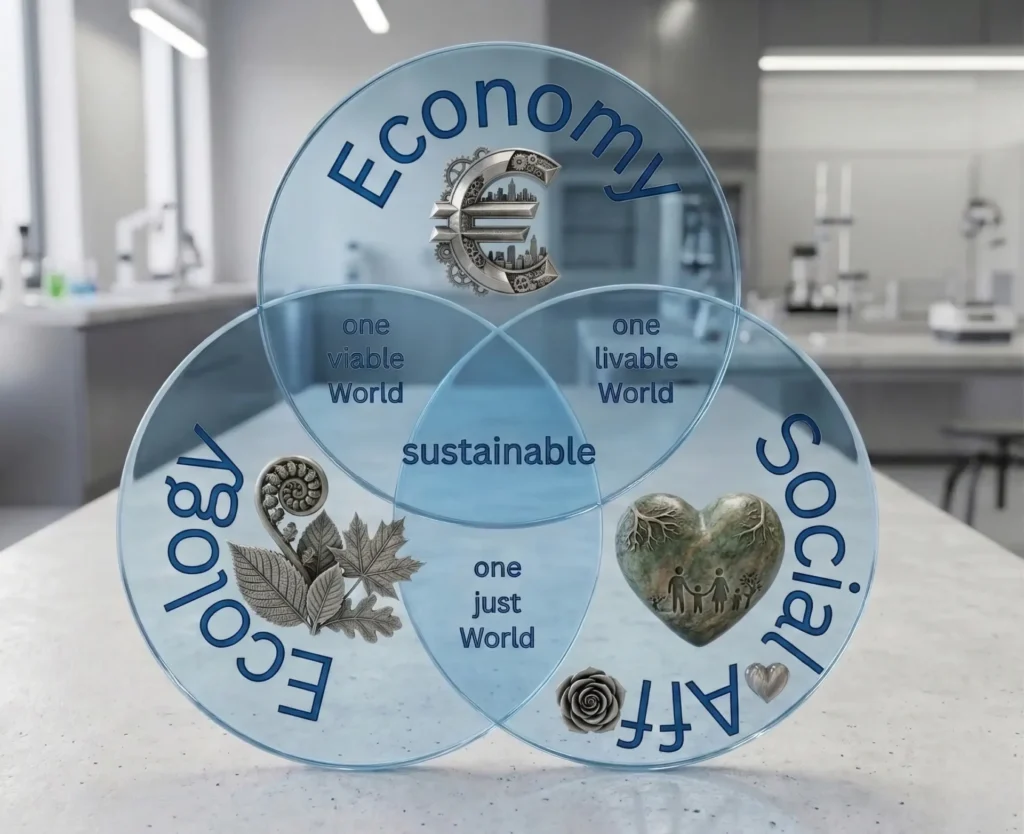
Specific Measures
Here much is already happening.
A range of measures across our operations already contribute directly to our sustainability commitments. Below is a selection of the actions we are actively implementing.
① Reducing the Impact Through Precious Metal Recovery
The recovery of precious metals is our core business — and it is inherently a sustainability activity. By processing catalytic converters, e-scrap, chemical solutions, and other precious metal-bearing waste streams, we return recoverable metals to industrial use without the need for primary mining. This directly reduces CO₂ emissions, energy consumption, and the ecological damage associated with primary ore extraction. Every transaction we process is a measurable contribution to the circular economy.
② Energy-Optimised Facilities
We continuously evaluate opportunities to reduce energy consumption across our processing and laboratory facilities, including building insulation improvements, heating system upgrades, and the efficient scheduling of energy-intensive processing operations.
③ Company Transport
When renewing our vehicle and equipment fleet, including company cars, transport vehicles, and forklifts, we consider low-CO₂ alternatives and prioritise options that reduce our operational emissions footprint.
④ Supply Chain Compliance
We operate within the comprehensive legal framework governing waste management in Romania and across the EU, including the European Waste Shipments Regulation and applicable anti-money laundering legislation. Our supply chain due diligence procedures align with EU regulatory requirements and the responsible sourcing principles applied by our certified refinery partners. We regularly review and update our due diligence documentation to reflect changes in applicable legislation across all our operating jurisdictions.
⑤ Environmental Management
Suran Recycling is certified to ISO 14001, and our environmental management system is audited annually and covers all operational processes across our facilities. We are committed to continuous improvement in environmental performance and document our progress against defined targets.
⑥ Our Social Commitment
We do not operate as an isolated entity — we are part of the communities in which we work. We maintain high standards for occupational health and safety, certified under ISO 45001, and are committed to the wellbeing of our team across all locations. We support social and environmental initiatives in our operating regions and maintain involvement in relevant industry and environmental organisations.
Reducing the Impact on the Environment Through Precious Metal Recovery
The environmental case for recycling over primary production.
The recovery of precious metals from industrial waste streams is in itself a significant contribution to environmental sustainability. When comparing CO₂ emissions between primary mining and secondary recovery, the difference is substantial — recycling produces a fraction of the greenhouse gases associated with extracting the same metals from primary ore.
Primary production of platinum group metals generates approximately 15,600 kg CO₂ per kg of metal produced. Secondary recovery through recycling generates approximately 1,248 kg CO₂ per kg — a reduction of over 90%. Every kilogram of precious metal recovered by Suran Recycling from catalytic converters, e-scrap, and industrial materials is one kilogram that does not require primary extraction.
| Primary / Mine | Secondary / Recycling | |
|---|---|---|
| CO₂ emissions per kg PGM | ~15,600 kg CO₂ | ~1,248 kg CO₂ |
| Relative impact | 100% | ~8% |
| Saving per kg recovered | — | ~14,352 kg CO₂ |
*Data based on published industry figures for platinum group metal production. Figures relate to CO₂ equivalent emissions across comparable production scopes
Questions & Answers
How does precious metal recovery contribute to sustainability?
Recovering precious metals from end-of-life catalytic converters, e-scrap, and industrial materials produces over 90% fewer CO₂ emissions per kilogram than primary mining. By returning these metals to industrial use, we reduce the demand for new extraction and the associated environmental damage — land use, energy consumption, and toxic byproducts — that comes with it.
Is Suran Recycling certified for environmental management?
Yes. Suran Recycling is certified to ISO 14001 for environmental management and ISO 45001 for occupational health and safety. Both certifications are maintained across our operational facilities and are subject to annual audits.
How does Suran Recycling address supply chain responsibility?
We operate within the legal framework governing waste management in Romania and across the EU — including the European Waste Shipments Regulation and applicable anti-money laundering legislation. Our supply chain due diligence procedures are aligned with EU regulatory requirements and with the responsible sourcing standards applied by our certified refinery partners. We review and update our procedures regularly to reflect changes in applicable legislation across all our operating jurisdictions.
Can Suran Recycling provide ESG documentation for my sustainability reporting?
Yes. We can provide transaction-level data on recovered precious metal volumes and the corresponding reduction in primary mining demand. This data is available in formats suitable for ESG reporting. Contact our team to discuss your specific documentation requirements.


